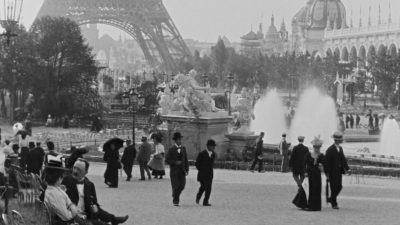
Part of the Documentary strand of this year’s French Film Festival is Lumière! The Adventure Continues, an homage to inventors of the cinématographe and pioneers of cinema, Auguste and Louis Lumière. Chosen from what was over 1400 films, this tribute consists of 108 beautifully restored 50-second silent films shot by the Lyon born brothers between 1895 and 1905.
The Lumières used their own supreme directing skills of capturing maximum action in a short space of time and Thierry Frémaux, who both directs and narrates, has mirrored these skills and principles in this selection of brief gems from the Lumière catalogue.
Divided in to various categories that are introduced in silent film style with white script on a black background, La Sortie des Usines Lumière sets the tone for future films by putting people literally at the centre. The brothers went on to film their own immediate family making them actors in their own lives with the likes of Feeding the Baby.
The categories show people at work and play, confirming the real elegance of the age they lived in as well as what was practical working clothes for poorer people. The images of a group of roped men mountaineering in the Mer de Glace, Chamonix in what looks like city clothes is quite remarkable. Real social documents.
The now iconic Arrival of a Train at La Ciotat may have alarmed contemporary audiences as they imagined the steam engine would crash through the screen, but was a forerunner to the effect of 3D many years later. While its very existence was revolutionary, Frémaux invites us to consider the film’s aesthetics. This fine documentary shows us that all the Lumière films where informed by the principle that “tout est mise en scène.”
This technique was passed on to cameramen like Alexandre Promio whose work features often in the documentary as the name Lumière went on to “offer the world to the world.” Examples of work from Martinique, Venice, Istanbul, Dublin, London, Venice, Jerusalem, Chicago, Vietnam, Japan and of course Paris, exemplify the Frenchmen’s vision and the skill of their protégés.
The camera may have been static but it captures overt and covert action. There is often a joker keen to be seen pulling a face or doing a daft dance though the candid shot of dancing Spanish soldiers together is a one off treat.
Frémaux frequently references the art of the time across the documentary citing scenes as Renoiresque and showing their 1896 film The Card Game that echoes Cézanne’s 1892 painting The Card Players. He also cites shots made by more recent directors that had been influenced by the Lumières.
A soundtrack by Gabriel Fauré with music by Camille Saint-Saëns add to the pleasure and privilege of witnessing these immaculate early masterpieces from visionaries who loved “ life, jokes and spectacle” and found a camera’s sweet spot for our ongoing delight. The experience of seeing them gives a real insight to France’s deep love of cinema. Une vraie joie!
Running time:106 mins
Scottish screenings:
Dundee Contemporary Arts on 21st November
Edinburgh Filmhouse on 25th November
Irene Brown

