This is one of those films that you hope and pray gets wide distribution so that as many people as possible get the chance to see it worldwide. But given that Indian cinema generally gets limited release in the UK, I suspect that that isn’t going to happen.
Initially coming across as kin to The Fugitive, it quickly develops into a tale of political corruption and ruthless big business doing as they please with the environment and the livelihood of ordinary people.
Writer-director Devashish Makhija introduces Dasru (Manoj Bajpayee) and Vaano (Tannishtha Chatterjee) living a peaceful existence in their village in Jharkhand, then moves forward five years where we find them living in Mumbai with their baby (the Joram of the title) under assumed names and working on a building site.
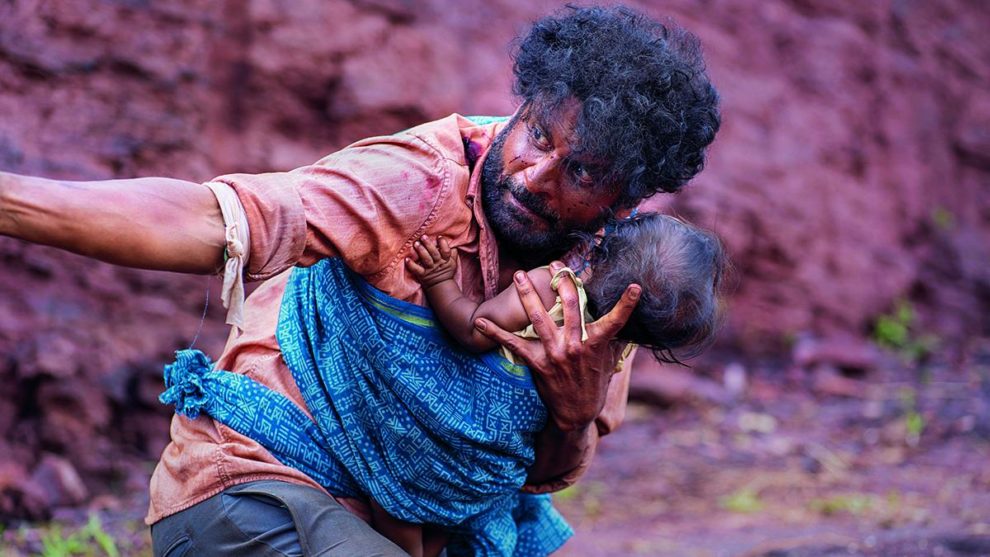
Until one day politician Phulo Karma (Smita Tambe) visits the site and recognises Dasru as one of the rebels responsible for the death of her son, who had set up a scam to con local tribespeople out of their land. A few days later Dasru comes home to find his wife has been murdered and the police are looking for him, forcing him to go on the run, taking the infant Joram with him.
He heads back to his home village, with Mumbai police officer Ratnakar (Mohammed Zeeshan Ayyub) in pursuit. As the chase goes on, Ratnakar comes to realise that he has been sent to track Dasru down, but once he does, he won’t be taking him back. Phulo Karma and her associates, be they business, political or the police, will deliver summary “justice”, and that may extend to him, too.
There are two scenes that stand out, and do so for differing reasons. The action sequence when Dasru boards a train in Mumbai, only to find he has been discovered and is pursued through the crowded carriages is edge-of-the-seat stuff. And when he finally reaches his home village to find the trees uprooted, the river diverted, houses demolished and heavy plant laying waste to the area, the desolation he feels as he walks the once familiar ground carrying his baby is palpable.
If there is a fault, it is in the density of the plot, that sometimes makes it a little difficult to keep track of the numerous malevolent characters and their place in the scheme of things. That apart, Makhija presents a film that works equally well on two levels, both as thriller and a portrayal of the ecological devastation face by the land and the indigenous peoples whose home it is.
Jim Welsh
 Radio Summerhall Arts